
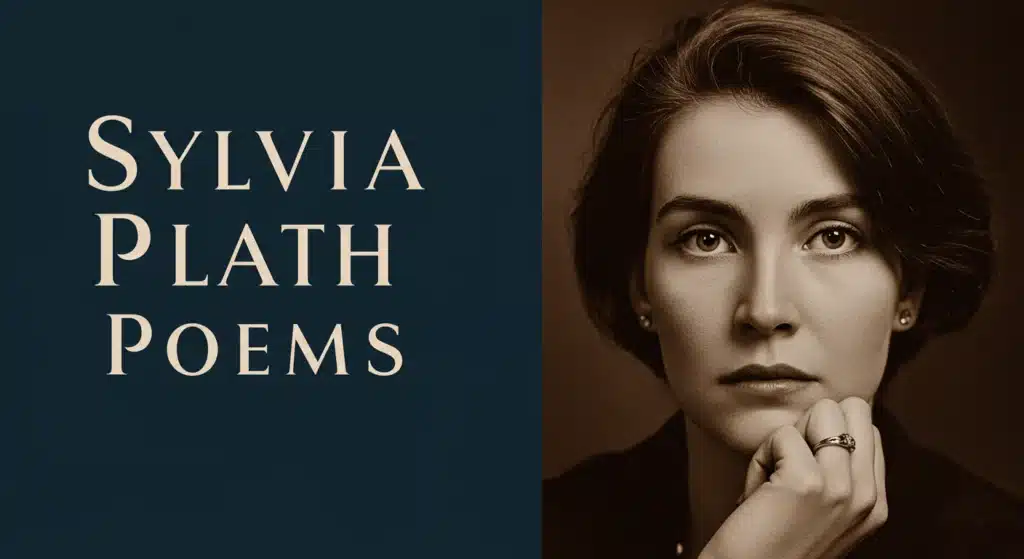
Sylvia Plath is one of the most influential poets of the 20th century, known for her raw emotional depth and vivid imagery. Her poetry captures themes of mental illness, self-identity, and the struggles of womanhood.
In this article, we’ll dive into her unique writing style, explore some of her most famous poems, and analyze what makes them so powerful. Whether you’re new to Sylvia Plath or have already read her work, you’ll find fresh insights into the emotional intensity that continues to resonate with readers today.
Background: Who Was Sylvia Plath?
Born in 1932, Sylvia Plath was an American poet and novelist who gained fame for her confessional writing style. Her poetry is characterized by vivid imagery, powerful emotion, and a constant exploration of mental health and personal identity.
Plath’s life was filled with challenges, from the early loss of her father to struggles with depression and ultimately her tragic death at the age of 30. Despite her short life, her work has had a lasting impact on literature, especially within the feminist and confessional poetry movements.
Her poetry is not just personal; it also speaks to universal human experiences. Her poems are often filled with a haunting emotional honesty that resonates with readers, making her one of the most read poets in modern literature.
Writing Style and Recurring Themes in Sylvia Plath’s Poems
Sylvia Plath’s writing is often described as “confessional” because of its deeply personal and emotional nature. Her poems are intense, raw, and filled with dark imagery. Plath’s work often explores themes of suffering, isolation, self-doubt, and a yearning for freedom, especially in the context of womanhood.
Symbolism and Imagery
Plath’s use of symbolism is vivid and layered. She frequently employs images of nature—flowers, bees, and the changing seasons—to explore human emotions. For example, the recurring image of bees in her work is symbolic of both life and death, fertility and decay. In poems like The Bee Meeting, the bees symbolize the tension between individuality and community, as well as the struggle for control and freedom.
Themes of Death and Mental Illness
Plath’s struggles with mental illness deeply influenced her work. Many of her poems reflect her internal battles with depression, suicidal thoughts, and the desire for escape. Yet, even as her poems dive into dark territory, they also display an underlying search for meaning and hope. Her exploration of death, suffering, and rebirth makes her poetry timeless and relatable.
Feminism and Identity
Plath’s poems also engage with the role of women in society, particularly the constraints of traditional gender roles. Poems like Lady Lazarus and The Applicant expose the pressures women face to conform to societal expectations. These poems critique both the personal and external forces that limit female expression and identity.
Poems and Their Meanings
Let’s now take a closer look at a few of Sylvia Plath’s famous poems and examine their meaning, tone, and symbolism.
1. Lady Lazarus
Lady Lazarus is one of Plath’s most well-known poems. The title refers to the biblical figure Lazarus, who was resurrected from the dead. In the poem, Plath compares herself to Lazarus, depicting a cycle of death and resurrection.
Lady Lazarus
I have done it again.
One year in every ten
I manage it—
A sort of walking miracle, my skin
Bright as a Nazi lampshade,
My right foot
A paperweight.
My face a featureless, fine
Jew linen.
Peel off the napkin
O my enemy.
Do I terrify?
The nose, the eye pits, the full set of teeth?
The sour breath
Will vanish.
My days are numbered.
Interpretation
This poem is a vivid metaphor for Plath’s struggles with suicide and recovery. It reveals the cyclical nature of her emotional and physical pain. Plath’s comparison to a “Nazi lampshade” suggests an image of suffering and horror. Yet, the line “I manage it” shows her resilience. She seems to acknowledge her torment but also her ability to rise from it, like Lazarus. The poem also explores themes of self-transformation, defiance, and power—Plath faces her suffering and dares the world to see her, almost as if to claim her life on her own terms.
Why It Matters Today
Lady Lazarus resonates with modern readers because of its raw expression of personal pain, strength, and survival. It speaks to anyone who has faced trauma or struggled to reclaim their identity in a world that may feel indifferent or hostile.
2. Ariel
Ariel is often regarded as one of Plath’s most significant works, written shortly before her death. It explores themes of identity, freedom, and the desire for transcendence.
Ariel
Stasis in darkness.
Then the substanceless blue
Surrounds me. I begin to see
The waves of the blue, the flocks of the blue.
Then I am changed, transformed.
I am flying, weightless,
And I will never return again.
Interpretation
This poem’s stark language and imagery reflect a profound sense of liberation and metamorphosis. The line “I am changed, transformed” suggests a release from physical and emotional constraints. The blue symbolizes the vast, infinite unknown, which could represent death, freedom, or a higher state of being. The speaker seems to break free from earthly suffering, reaching toward something larger than herself.
Why It Matters Today
In a modern context, Ariel can be seen as an exploration of escape from the limitations imposed on individuals—whether by society, mental illness, or other forces. The poem speaks to those who seek personal freedom, transformation, or release.
3. The Bell Jar
The Bell Jar was Sylvia Plath’s only novel, but it also gives insight into her poetic themes. The poem inspired by the novel shares a similar emotional depth and addresses themes of mental illness, identity, and the pressures of society.
The Bell Jar
I am the bell jar,
My life inside of me
A shattering thing,
That never stops breaking
Even in sleep.
I am the glass,
I am the soundless scream.
No one hears.
Interpretation
The image of a “bell jar” captures the feeling of being trapped and suffocated. The speaker is unable to escape her thoughts and emotions, and even in sleep, she is unable to find peace. The metaphor of the bell jar evokes both isolation and confinement, as though the speaker is on display, unable to escape the suffocating forces around her.
Why It Matters Today
This poem resonates with readers who feel disconnected or trapped in their circumstances, especially in today’s world where mental health struggles can often go unnoticed or misunderstood.
4. The Applicant
In The Applicant, Plath critiques the social and personal expectations placed on women, especially in terms of marriage and relationships.
The Applicant
To all intents and purposes
You are a man
The form you fill is a beautiful lie.
The applicant.
Your gaze holds the polished glass
Of the world.
But where are you going?
Where does it end?
Interpretation
This poem presents a sarcastic and critical view of societal expectations placed on individuals, especially women. The “applicant” becomes a metaphor for the person conforming to society’s narrow definitions of success or identity. It highlights the emptiness of following predetermined roles and emphasizes the power of self-exploration.
Why It Matters Today
In today’s world, The Applicant still rings true in our conversations about gender roles, identity, and the pressure to meet societal standards. It challenges readers to question their paths and the assumptions placed upon them.
FAQs about Sylvia Plath and Her Poems
1. What are the recurring themes in Sylvia Plath’s poems?
Sylvia Plath’s poems frequently explore themes of mental illness, death, identity, and the struggles of womanhood. Her works are known for their intense emotional depth, vivid imagery, and symbolism. Plath often used nature metaphors and powerful, personal language to convey her inner turmoil and search for meaning.
2. Why is Sylvia Plath considered a feminist poet?
Plath’s work addresses the challenges women face in a patriarchal society. Poems like The Applicant and Lady Lazarus critique gender roles and societal expectations placed on women. Her exploration of personal suffering, the constraints of marriage, and the pursuit of identity made her a prominent figure in feminist literature.
Conclusion
Sylvia Plath’s poems continue to captivate and inspire readers because of their emotional intensity, exploration of identity, and unflinching honesty. Her ability to turn personal pain into universal poetry makes her work relevant today, offering insights into human suffering, survival, and transformation. Whether you are drawn to her powerful metaphors, the haunting beauty of her words, or the raw emotion that pours through every line, Plath’s poetry invites reflection and understanding.