
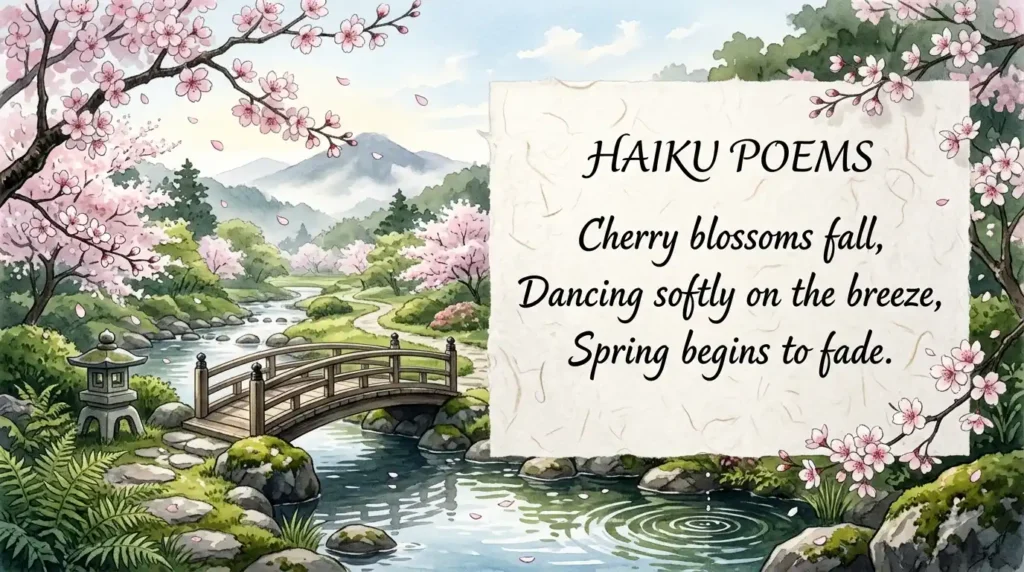
Haiku poems have a quiet kind of power. They do not use many words, yet they can hold a season, a feeling, or a whole memory in just a few lines. That is why readers still love them today. In this guide, you will discover where haiku comes from, what makes it special, and why it still feels fresh in modern life. You will also read 10 original haiku style poems with simple meanings, so you can enjoy the form and understand its beauty. By the end, you will also know how to write your own haiku poem with confidence.
What Are Haiku Poems?
Haiku poems are short poems that focus on one small moment. They often show nature, weather, time, or a simple scene from daily life. Instead of explaining everything, they let the reader feel the moment.
A traditional Japanese haiku is usually written in three lines. It often includes a seasonal image and a pause or contrast between two ideas. However, in English, many modern poets care more about the mood, image, and feeling than strict counting.
That is what makes haiku poems so beautiful. They are short, but they open a big space inside the reader’s mind.
The History Behind Haiku Poems
Haiku poems began in Japan and grew out of older linked-verse traditions. Over time, poets shaped the form into a poem that could stand on its own. One of the most famous names linked to haiku is Matsuo Basho. He helped turn haiku into an art of careful attention.
Later poets like Yosa Buson, Kobayashi Issa, and Masaoka Shiki also shaped the tradition. Each brought a different voice. Basho often felt calm and deep. Buson was known for painterly detail. Issa brought warmth and human feeling. Shiki helped renew the form for a changing world.
Even though haiku started centuries ago, it still speaks to modern readers. That is because life still moves through seasons, silence, loss, joy, and change. Haiku notices these things in a simple way.
The Writing Style and Themes of Haiku Poems
Haiku poems may be short, but they are very rich in style. They often use plain language. They avoid too much explanation. Instead, they trust the image.
Nature Is Often at the Center
A falling leaf, morning rain, winter smoke, or a bird on a fence can become the heart of a haiku. Nature is not just decoration. It carries feeling.
Small Moments Matter
Haiku poems usually do not tell long stories. They stop and hold one moment still. That pause is part of their magic.
Suggestion Is Stronger Than Explanation
Good haiku does not push meaning. It leaves room for the reader. That means two people may feel two different things from the same poem.
Seasons and Change
Spring, summer, autumn, and winter appear often in haiku poems. The season helps set the emotional tone. Spring may feel hopeful. Autumn may feel reflective. Winter may feel quiet or lonely.
Simplicity and Silence
Haiku poems do not need grand words. In fact, simple words usually work better. The silence around the words matters too.
Poems and Their Meanings
Below are 10 original haiku-style sequences. Each one keeps the spirit of haiku poems: brief images, simple language, and emotional depth.
1. Morning Window
Soft gold on the wall
tea steam curls in the still room
sparrows test the light
A truck hums far off
day opens without hurry
dust glows in silence
Meaning:
This poem captures the soft beginning of a day. The sunlight, tea steam, and sparrows create a calm mood. Nothing dramatic happens, yet the moment feels full. The truck in the distance reminds us that the world is waking up, but the speaker is still inside a quiet pause.
The tone is peaceful and grounded. The dust glowing in silence suggests that beauty often lives in very ordinary spaces. Modern readers can connect with this because many of us rush through mornings. This poem invites us to notice what we usually miss. It says that a gentle start has value.
2. First Rain
Dry earth drinks at once
the street darkens into glass
children lift their faces
One shoe fills with mud
mothers call from shaded doors
summer smells brand new
Meaning:
This poem centers on the first strong rain after heat. The image of dry earth drinking at once gives the rain life and purpose. The children lifting their faces shows joy without needing to say the word joy.
There is also a warm human touch in the muddy shoe and the mothers calling. That keeps the poem rooted in everyday life. The tone feels fresh and playful. For modern readers, this poem connects with the simple relief that rain can bring after stress or heat. It reminds us that renewal is both natural and emotional.
3. Winter Bench
Empty park at dusk
one red scarf on the cold bench
snow gathers slowly
Footprints stop nearby
the sky lowers into gray
breath turns into cloud
Meaning:
This poem feels quiet and a little lonely. The red scarf is the strongest symbol. It hints that someone was here, and now they are gone. Because the poem does not explain more, the reader fills in the silence.
The footprints stopping nearby deepen the mystery. The tone is reflective, maybe even sad, but not heavy. The poem shows how absence can be felt through objects. Modern readers may connect with the feeling of loss, memory, or waiting. It shows that even stillness can carry emotion.
4. Old Garden Gate
Rust on the old latch
jasmine climbs where paint has peeled
bees drift through warm noon
Grandmother once stood
here with soil on both her hands
calling us to eat
Meaning:
This poem joins present time with memory. The gate, latch, jasmine, and bees create a living scene, but then the poem opens into the past. The grandmother appears through memory, not through direct story.
That shift adds tenderness. The garden is more than a place. It holds family love and routine. The tone is warm and slightly nostalgic. Many readers can connect with this because certain smells or places bring back loved ones. The poem shows how haiku poems can hold memory in a very small space.
5. City Pigeon
On the station rail
a pigeon guards a bread crust
trains shake the platform
Phones glow in tired hands
no one sees the small gray king
owning the morning
Meaning:
This poem brings haiku into city life. Instead of mountains or rivers, it focuses on a pigeon at a train station. That makes the form feel modern and close to daily experience.
The “small gray king” adds humor and respect. While people stare at their phones, the bird seems fully present and in control. The tone is light but thoughtful. The deeper idea is that life is happening everywhere, even in places we think are dull. Modern readers can connect with this because it speaks to distraction and the lost art of noticing.
6. Lantern Festival
Paper lanterns sway
over the river at night
stars blur in the black
A child lets one go
both hands open to the dark
wish rising with flame
Meaning:
This poem is full of light, motion, and hope. The river and stars create a dreamy setting. Then the child releasing a lantern becomes the emotional center of the poem.
The open hands symbolize trust, hope, and letting go. That makes the poem feel deeply human. The tone is tender and full of wonder. Readers today can connect with the idea of sending a wish into the unknown. It speaks to hope in uncertain times, which is always meaningful.
7. Autumn Steps

Leaves crowd the stone stairs
each one dry as folded notes
wind reads them aloud
At the top, late sun
rests on the unlocked front door
someone will come home
Meaning:
This poem uses autumn imagery to explore waiting and comfort. The leaves as “folded notes” is the key image. It gives the natural world a voice. The wind becomes a reader, turning sound into feeling.
The unlocked front door adds warmth and trust. There is waiting here, but not fear. The tone is expectant and soft. Modern readers may connect with the longing for return, home, and closeness. The poem gently suggests that love can live in ordinary signs of welcome.
8. Hospital Dawn
Blue hall before light
a nurse adjusts the curtain
machines blink like stars
In the waiting chair
a father sleeps with one shoe off
morning enters slow
Meaning:
This poem shows that haiku poems can also hold modern and serious spaces. The hospital setting feels fragile. The blinking machines “like stars” make the room feel both cold and strangely tender.
The father sleeping with one shoe off is a powerful detail. It shows exhaustion, worry, and love without saying any of those words directly. The tone is quiet and emotional. Readers can connect with this because it reflects care, fear, and hope in hard moments. It proves haiku can speak to modern life just as strongly as to nature.
9. Seaside Evening
Waves erase the names
children wrote with broken shells
gulls circle above
Salt dries on warm skin
the sun slips under the pier
laughter stays behind
Meaning:
This poem is about time passing, but not in a sad way. The waves erasing names show how moments disappear. Still, the poem ends with laughter staying behind, which means memory lasts even when the scene changes.
The tone is warm, free, and slightly reflective. The sea becomes a symbol for time itself. Modern readers can connect with this because many happy moments are brief, yet they remain with us in feeling. The poem says that not everything lasting must remain visible.
10. Midnight Desk
Lamp over the page
outside, the whole street is rain
ink pauses mid-word
One moth taps the glass
as if carrying a thought
I almost remember
Meaning:
This poem explores writing, memory, and creative silence. The rain outside and lamp inside create a private mood. The paused ink suggests a stuck moment, something many readers know well.
The moth becomes a symbol of an idea that comes close but not fully. “I almost remember” gives the poem a haunting softness. The tone is thoughtful and intimate. Modern readers, especially writers, students, or late-night thinkers, can connect with this feeling of reaching for something just beyond language.
Why Haiku Poems Still Matter Today
Haiku poems still matter because they teach attention. In a noisy world, they help us slow down. They show that one small image can hold deep feeling.
They also fit modern life in a practical way. People are busy. Many readers do not have the time or energy for long, dense writing every day. Haiku offers meaning in a small space, but that does not make it shallow. In fact, it often feels deeper because it is so focused.
Also, haiku poems are easy to enter but hard to master. That makes them welcoming. A beginner can write one today. A lifelong poet can still keep learning from the form.
Most of all, haiku helps us notice. A bird, a hallway, a leaf, a hand on a door, the smell after rain. These things matter. Haiku reminds us that life is built from small moments, not only big events.
How to Write Your Own Haiku Poem
Writing haiku poems can be simple and enjoyable. Start with one clear moment.
Notice One Small Scene
Do not try to write about everything. Pick one image: rain on a roof, a quiet cup of tea, a cat at the window.
Use Simple Words
Haiku works best with plain, direct language. Say what you see and feel without forcing it.
Focus on the Image
Instead of explaining sadness, show a wilted flower in a glass. Instead of saying hope, show first light through clouds.
Include Nature or Season if It Fits
Traditional haiku often includes a seasonal touch. You can do that too, but it does not have to feel forced.
Leave Some Space
Do not explain every meaning. Let the reader step into the poem and feel part of it.
Keep It Short
Traditional haiku is three lines. In English, you can focus more on rhythm and clarity than strict counting. The point is brevity, not pressure.
Here is a quick example:
Cold cup by the sink
morning rain taps the window
the house stays asleep
This works because it is simple, visual, and quiet.
FAQs About Haiku Poems
What is the main purpose of haiku poems?
The main purpose of haiku poems is to capture a brief moment with clarity and feeling. They help readers notice beauty, change, or emotion in simple scenes.
Do haiku poems always have 17 syllables?
Not always in English. Traditional Japanese haiku follows a sound pattern, but many English haiku poets focus more on image, mood, and brevity than exact syllable count.
Do haiku poems have to be about nature?
Nature is very common in haiku poems, but modern haiku can also explore cities, family, illness, work, memory, and daily life.
Why are haiku poems so short?
Haiku poems are short because they aim to show one moment clearly. Their power comes from precision, not length.
Can beginners write good haiku poems?
Yes. Haiku is one of the best poetry forms for beginners because it teaches observation, simplicity, and emotional honesty.
Conclusion
Haiku poems continue to matter because they show how much feeling can live inside a few careful lines. They connect the outer world with the inner one, turning rain, light, silence, and memory into something lasting. Even today, they help readers slow down and pay attention.
That is a rare gift. Whether you read old masters or write your own small poems at home, haiku can sharpen your eye and soften your heart. The best way to understand haiku poems is simple: keep reading them, keep noticing the world, and let small moments speak.